About The Author: Travis Baugh is a Digital Brand Marketing Manager for Bryant, where he creates clear, helpful content to guide homeowners through heating, cooling, and indoor air quality decisions. His goal is to empower readers with the knowledge they need to choose the right comfort solutions for their home—confidently and comfortably.
HVAC Zoning System: Precision Comfort for Every Room
An HVAC zoning system is a heating and cooling configuration that divides your home into separate areas—or "zones"—allowing independent temperature control for each space using motorized dampers and multiple thermostats. Instead of heating or cooling your entire home to a single temperature, zoning gives you the power to customize comfort where you need it most, enhancing efficiency and reducing energy waste.
In modern homes, one size rarely fits all. Whether you have a multi-story residence, large windows that heat up specific rooms, or family members with different comfort preferences, an HVAC zoning system offers a visionary solution. By treating different areas of your home independently, you stop overworking your system and start investing in comfort that is tailored to your lifestyle. thermostats HVAC products
What is an HVAC Zoning System?
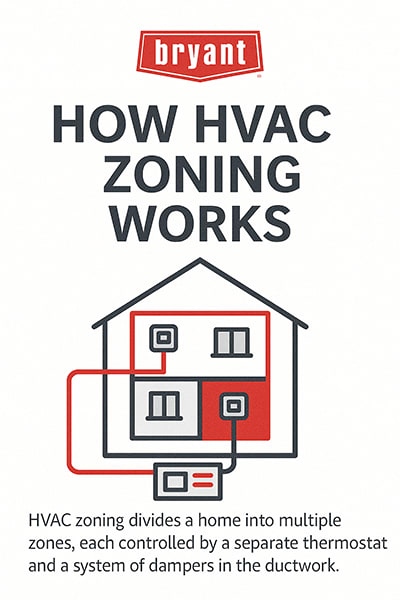
An HVAC zoning system is a climate control solution that utilizes a network of thermostats, a central control panel, and dampers within the ductwork to regulate temperature in specific areas of a home.
Unlike traditional systems that blast air throughout the entire house based on a single thermostat reading, zoning allows for "smart" distribution. Think of it like the light switches in your home; you wouldn't use one switch to turn on every light in the house. Zoning applies that same logic to your heating and cooling.
Key Components
- Zone Thermostats: Sensors in each area that detect temperature and send signals to the main system.
- Motorized Dampers: Valves located inside the ducts that open or close to control airflow to specific zones.
- Central Control Panel: The "brain" that processes thermostat requests and coordinates the HVAC equipment and dampers.
By heating or cooling only occupied spaces, an HVAC zoning system promotes efficiency that pays for itself, potentially lowering monthly utility bills while eliminating hot and cold spots.
How Do HVAC Zoning Systems Work?
HVAC zoning systems work by opening and closing dampers inside your ductwork to direct conditioned air only to the zones that need it, based on the settings of individual thermostats in those areas.
When a zone calls for heating or cooling, the central control panel activates the HVAC unit and opens the dampers to that specific zone while closing dampers to zones that are already comfortable. This process ensures precise temperature control without wasting energy on empty rooms.
Most modern heating and cooling equipment—including furnaces, air conditioners, and heat pumps, can be retrofitted or designed to work with zoning technology. This means you can often upgrade your home’s IQ without a complete system overhaul.
3 Key Benefits of HVAC Zoning Systems
Why make the switch? Beyond the immediate gratification of a perfectly comfortable room, the long-term zoning benefits are substantial.
- Energy Efficiency and Cost Savings: By directing airflow only where it is needed, you reduce the workload on your system. This targeted approach minimizes energy waste, leading to lower utility bills and a smaller carbon footprint.
- Enhanced Comfort Levels: Eliminate the "thermostat wars." Zoning solves common issues like a hot upstairs and a freezing basement. Every family member can enjoy their preferred temperature in their own space.
- Customization and Control: With the integration of smart thermostats, you can program zones based on your schedule—warming up the bedroom before sleep or cooling the living room for a gathering—providing a seamless, intuitive experience.

Factors to Consider When Choosing a Zoning System
Before installing, evaluate these three factors to ensure your new system delivers the reliable performance Bryant is known for.
- Home Layout and Architecture: Multi-story homes, homes with high ceilings, or properties with large glass exposures often benefit most from zoning. Open floor plans may require fewer zones than segmented layouts.
- HVAC System Compatibility: While many systems are compatible, variable-speed units are often the best match for zoning because they can adjust airflow output to match the demand of fewer zones.
- Usage Patterns: Consider how you use your home. Do you have a home office you use all day but a guest room that sits empty? Mapping your usage helps determine the optimal number of zones.
Installation of HVAC Zoning Systems
Installing an HVAC zoning system requires a professional assessment of your ductwork and load calculations to ensure the system is balanced and effective.
The process involves installing motorized dampers into existing or new ductwork, wiring thermostats for each zone, and connecting everything to a central control board. Incorrect installation can lead to increased static pressure, which can damage your equipment or increase noise.
Chris Houchin, co-owner of The Weather Changers in Denver, Colorado, stresses the importance of the HVAC zoning system being installed properly.
“I've been to homes that are over 3,000 square feet that have one system that is undersized,” Houchin said. “If two zones are closed and one is open, it's perfect. You open all three zones, it is massively undersized, it is not going to heat or cool the whole house. As long as you get a properly sized system, they can be incredible.”
Trusting your local Bryant dealer ensures your installation meets rigorous standards for quality and reliability.
Maintenance of HVAC Zoning Systems
To keep your system running quiet as a whisper, routine HVAC maintenance is essential.
- Check Dampers: Ensure they are not stuck and are responding to thermostat commands.
- Replace Filters: Clean filters are crucial for maintaining proper airflow and air quality.
- Professional Tune-ups: An annual inspection by a certified HVAC technician can catch issues with the control board or sensors before they impact your comfort.
Connect With A Bryant Dealer on HVAC Zoning
Connect with your local Bryant dealer to discover how HVAC zoning can maximize your home’s comfort and energy efficiency. A Bryant expert will help you customize the perfect solution for your space, ensuring year-round comfort tailored to your needs. Schedule an appointment to start the process today.
HVAC Zoning FAQs
An HVAC zoning system divides a home into separate temperature zones, allowing independent control of heating and cooling in different areas using dampers and multiple thermostats.
Installing an HVAC zoning system typically costs between $2,000 and $5,000, depending on the number of zones, system complexity, and ductwork modifications. It’s best to talk to your local Bryant dealer to get an accurate quote.
Yes, HVAC zoning can save money by helping reduce energy usage, since it allows you to heat or cool only occupied areas instead of the entire home.
HVAC zoning uses one system with dampers to control airflow to different zones, while two systems involve two completely separate HVAC units, each serving part of the home.
Most homes benefit from 2 to 4 zones, depending on factors like square footage, layout, sun exposure, and individual comfort needs across different areas. It’s best to talk to your local Bryant dealer to determine how many HVAC zones you should have.
An HVAC technician can retrofit your current system with zoning dampers, controls, and a smart thermostat to regulate temperatures by area.
Yes—zoned systems can be worth it as they improve comfort, reduce energy waste, and give homeowners more control over room-by-room temperatures.
Zoned systems use motorized dampers and multiple thermostats to direct conditioned air only where it’s needed, enhancing efficiency and comfort.
Learn More About HVAC
- Discover what is HVAC
- Get help with HVAC repair
- Find out more about HVAC service
- Read our guide on HVAC replacement
- Check out our HVAC pricing guide
- Explore HVAC installation


