About The Author: Travis Baugh is a Digital Brand Marketing Manager for Bryant, where he creates clear, helpful content to guide homeowners through heating, cooling, and indoor air quality decisions. His goal is to empower readers with the knowledge they need to choose the right comfort solutions for their home—confidently and comfortably.
Master Your Home's Climate with Precision Humidity Control
Humidity control is the active management of indoor moisture levels—ideally keeping relative humidity between 30% and 50%—to prevent mold growth, protect your home's structure, and ensure optimal comfort.
A truly comfortable home goes beyond just temperature. When moisture levels are perfectly balanced, the air feels cleaner, allergens are reduced, and your living space adapts seamlessly to seasonal changes. Bryant offers the innovative technology and reliable solutions you need to achieve this balance, turning your home into a quiet sanctuary of health and energy efficiency.
What Is the Ideal Indoor Humidity Level?
The ideal indoor humidity level for most homes is between 30% and 50% relative humidity (RH). Staying within this specific range prevents the growth of mold and dust mites while avoiding the excessively dry air that causes respiratory irritation and static electricity.Why is the 30–50% Range Critical?
Maintaining indoor humidity between 30% and 50% is the industry standard for optimal living because it strikes the perfect balance between comfort and home protection.
- Below 30% (Too Dry): Common in winter. Low humidity can lead to static electricity, dry skin, respiratory irritation, and cracking in wood furniture or trim.
- Above 50% (Too Humid): Common in summer. High humidity encourages dust mites, mold spores, and bacteria. It can also cause wood floors to warp and make the air feel heavy or "sticky."
The Benefits of Total Humidity Management
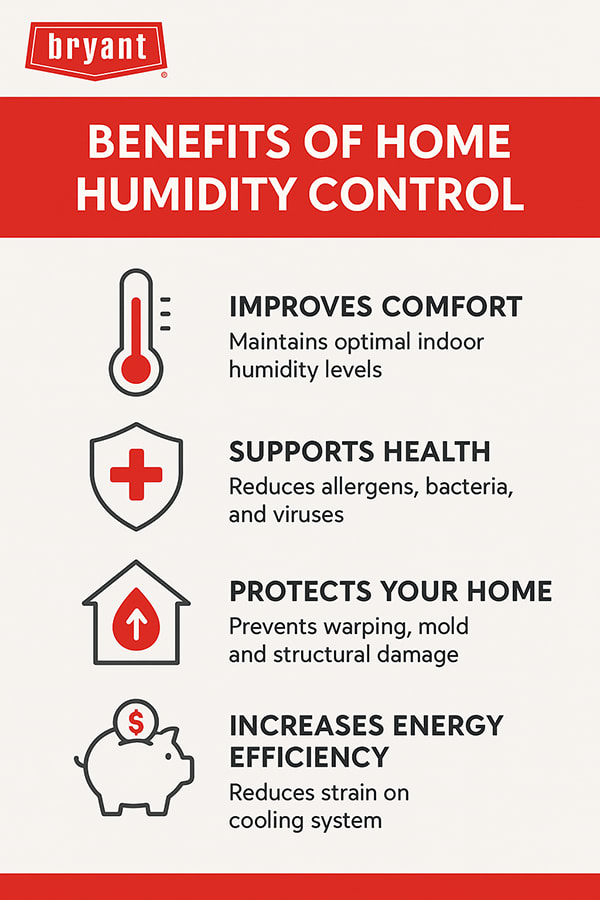
Proper humidity management improves indoor air quality, protects your home's structural integrity, and boosts energy efficiency so you can feel comfortable at energy-saving temperatures. Investing in advanced humidity control delivers measurable, long-term value for homeowners seeking reliable performance:
- Enhanced Indoor Air Quality: By keeping moisture in the optimal range, you significantly reduce the presence of airborne pollutants like mold and dust mites that thrive in extreme conditions, allowing your family to breathe cleaner air.
- Protection for Your Home: Wood floors, antique furniture, and musical instruments are sensitive to moisture fluctuations. Balanced humidity prevents warping, cracking, and peeling paint.
- Energy Efficiency: "Sensible cooling" allows you to feel comfortable at higher temperatures in the summer if the humidity is low. Conversely, proper humidity in winter makes the air feel warmer, allowing you to lower the thermostat and save on energy bills.
How to Measure and Monitor Indoor Humidity
The most reliable way to track indoor moisture is with a digital hygrometer or a smart thermostat equipped with humidity sensors.
For the best results, leverage Bryant smart thermostats with integrated monitoring. These devices allow you to view real-time humidity levels directly from the Bryant SmartHome App and signal your HVAC system to make automatic adjustments—giving you effortless control over your home's health.

What Are The Best Humidity Control Solutions For Every Season?
The best solutions for managing seasonal humidity changes are whole-home dehumidifiers for humid summers and whole-home humidifiers for dry winters. Whether you are battling the dry chill of winter or the sticky heat of summer, Bryant provides whole-home solutions designed to integrate seamlessly with your existing HVAC system.
How Do You Combat High Humidity?
Bryant whole-home dehumidifiers work in tandem with your air conditioner to actively remove excess moisture from your entire house. Unlike noisy portable units that only treat one room, these systems treat the air in your entire home, preventing musty odors and inhibiting mold growth efficiently and quietly.
How Do You Combat Low Humidity?
Bryant whole-home humidifiers infuse necessary moisture into your air during dry months to keep your environment comfortable. This helps alleviate dry skin and static shock while making your home feel warmer without cranking up the heat.
How Do Smart Thermostats Help With Humidity Control?
Pairing your equipment with a Bryant smart thermostat gives you effortless control over your indoor climate. These devices constantly monitor indoor conditions and signal your HVAC equipment to add or remove moisture automatically, ensuring consistent, eco-friendly comfort day and night.
How Do You Maintain Ideal Indoor Humidity Conditions?
Achieving consistent humidity requires a combination of smart HVAC technology and simple routine home maintenance habits.
- Seasonal Adjustments: In winter, aim for the lower end of the 30-50% range to prevent window condensation. In summer, aim for the lower end to keep the air feeling crisp.
- Ventilation: Always run exhaust fans in bathrooms and kitchens to vent steam outdoors.
- Air Circulation: Keep interior doors open to allow conditioned air to flow freely.
- Routine Maintenance: Schedule HVAC maintenance to inspect drain lines and clean coils. Replace filters every 1-3 months to ensure your system runs efficiently.
Connect With A Bryant Dealer On Humidity Control Solutions
Schedule an appointment with your local Bryant dealer to identify the right humidity control solution for you and get an accurate quote for whole house dehumidifier cost or whole house humidifier cost.
Humidity Control FAQs
Humidity control involves maintaining balanced moisture levels in your home’s air. It’s important because it helps protect your home’s structure, improves comfort, and supports healthy indoor air quality by reducing allergens and mold growth.
You can measure indoor humidity with a hygrometer, a small and inexpensive device that displays real-time humidity levels. Many modern thermostats and smart home systems also include built-in humidity sensors.
Excess humidity promotes mold, mildew, and dust mites, which can worsen allergies and respiratory issues. It can also cause musty odors and make your home feel warmer and stuffier.
Whole-home dehumidifiers, proper ventilation, and air conditioning can all help regulate indoor humidity. Using bathroom and kitchen exhaust fans and sealing leaks around windows and doors also helps prevent excess moisture buildup.
Common signs include condensation on windows, musty smells, damp walls or ceilings, and visible mold or mildew. You might also notice sticky air or worsening allergy symptoms.
Yes, an advanced smart thermostat equipped with humidity sensors can monitor your indoor air and automatically signal your whole-home humidifier or dehumidifier to adjust moisture levels. This provides seamless, hands-off climate control.
Yes, maintaining proper indoor humidity can help lower energy costs. When humidity levels are balanced, your home often feels more comfortable at slightly higher temperatures in summer and slightly lower temperatures in winter. This means your HVAC system may not need to run as long or as often to maintain comfort, which can reduce overall energy use while also improving indoor air quality and protecting your home from excess moisture.
Learn More
- Discover the best dehumidifier for your home
- Explore whole house dehumidifier options
- Learn what does a dehumidifier do
- Understand dehumidifier benefits
- Discover the benefits of a basement dehumidifier
- Understand when to use a dehumidifier


