About The Author: Travis Baugh is a Digital Brand Marketing Manager for Bryant, where he creates clear, helpful content to guide homeowners through heating, cooling, and indoor air quality decisions. His goal is to empower readers with the knowledge they need to choose the right comfort solutions for their home—confidently and comfortably.
What is Furnace Short Cycling and How Can You Fix It?
Furnace short cycling occurs when your heating system turns off and back on repeatedly in unusually short cycles, often before the home reaches the thermostat's desired temperature. Bryant notes that normal heating cycles commonly run for about 10–15 minutes or longer, although cycle length varies by system, outdoor temperature, and home conditions. Repeated cycles lasting only a few minutes can indicate a problem. This frequent stopping and starting can prevent your home from heating properly, increase energy use, and put excessive wear and tear on your HVAC equipment.
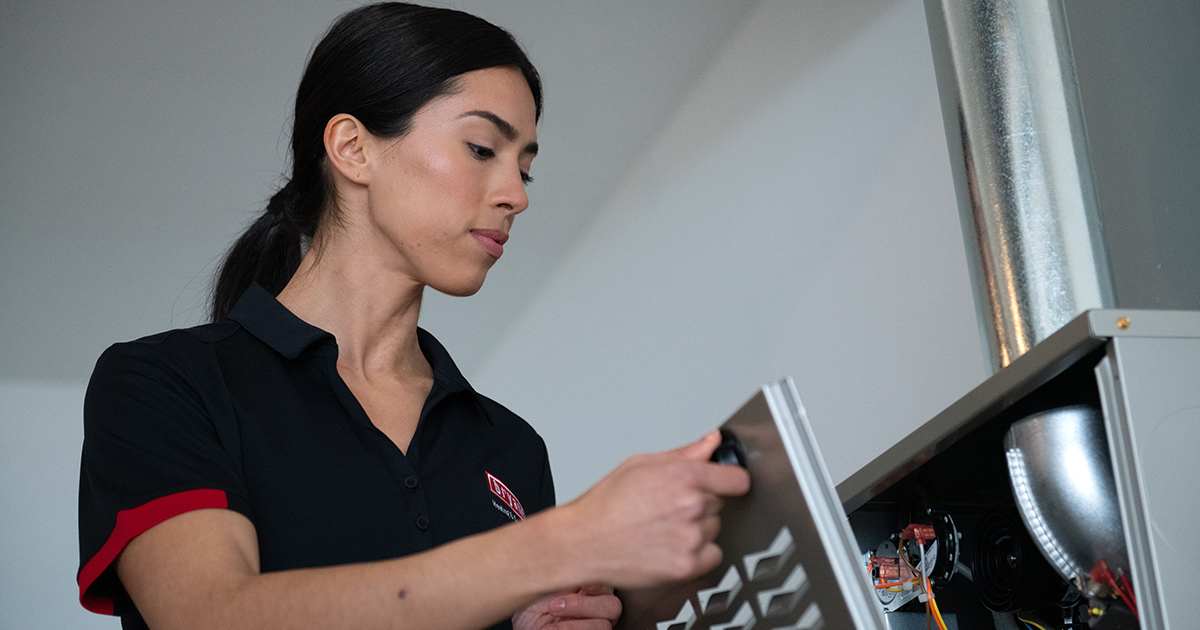
When a furnace short cycles, it disrupts that peace and can contribute to higher energy use and uneven comfort. Understanding the root causes of this issue is the first step toward restoring long-term comfort, reliability, and efficient energy use in your home. Let's break down exactly why your system might be struggling and how to address it effectively
What Causes Furnace Short Cycling?
Furnace short cycling is typically caused by restricted airflow, a malfunctioning thermostat, a faulty flame sensor, blocked exhaust or combustion-air pathways, or an incorrectly sized heating system. Addressing these underlying issues promptly can help prevent additional equipment wear and restore proper operation.
Bryant's furnace troubleshooting guidance identifies dirty filters, thermostat problems, airflow restrictions, and equipment or component issues as important areas to check when a furnace is malfunctioning.
Bryant's 4-Step Furnace Short Cycling Check
| Check | What to look for | Recommended action |
| 1. Cycle length | Repeated heating cycles lasting only a few minutes, particularly when the home has not reached the thermostat setting | Continue with the checks below. Cycle length is a diagnostic clue, not a universal cutoff. |
| 2. Airflow | Dirty filter, closed supply registers, or blocked return grilles | Replace a dirty filter and make sure vents and returns are open and unobstructed. |
| 3. Thermostat | Incorrect settings, low batteries, direct sunlight, drafts, or nearby heat-producing appliances | Check settings and thermostat placement. |
| 4. Furnace operation | The furnace repeatedly shuts down before reaching the thermostat setting | Turn the system off if the problem persists and contact a qualified HVAC professional. |
This four-step check is a Bryant-oriented homeowner troubleshooting framework based on Bryant's published furnace guidance; it is intended to identify areas for investigation, not to diagnose a specific furnace fault.
To understand why your furnace is behaving this way, it is helpful to look at the most common culprits. According to HVAC experts, these are the primary reasons a furnace will short cycle:
- Clogged Air Filters: A dirty filter is one of the first things to check when troubleshooting a short-cycling furnace. When the filter is clogged with dust and debris, airflow is restricted. Reduced airflow can cause the heat exchanger to overheat, triggering the high limit switch to shut the furnace down as a safety precaution. Bryant recommends checking your filter monthly. Depending on the filter type, Bryant's current guidance lists replacement intervals ranging from about 30 days for 1-inch fiberglass filters to 60–90 days for 1-inch pleated filters and about twice per year for some 4- or 5-inch media filters.
- Improper Thermostat Placement or Calibration: Your thermostat acts as the brain of your heating system. If it is located near a heat source—such as a sunny window, a heat register, or an oven—it may mistakenly read that the room is warmer than it actually is, causing the system to shut off prematurely. Bryant recommends locating thermostats away from direct sunlight, drafts, windows, vents, and heat-producing appliances.
- Faulty Flame Sensor: The flame sensor is a vital safety component that detects whether gas is actually burning. If the sensor is dirty or faulty, the furnace may shut down the burners shortly after ignition because the control system does not detect the expected flame signal. A flame-sensor problem is only one possible cause of this symptom; ignition, wiring, grounding, gas supply, and control problems can produce similar behavior.
- Oversized Furnace: An oversized furnace will heat your home too quickly, reaching the target temperature and shutting off before completing a full, efficient cycle. This constant rapid heating and cooling leads to significant temperature fluctuations and short cycling. Learn more about the importance of furnace size.
- Blocked Exhaust Vents: Modern furnaces have safety controls that can shut the system down if combustion gases cannot safely escape. A blocked flue or exhaust vent can create a potentially dangerous operating condition and requires professional inspection. Do not attempt to repair or modify furnace venting yourself.
Why is Furnace Short Cycling Bad for Your Home?
Furnace short cycling is bad for your home because it can increase energy use, accelerate wear on components, and contribute to uneven indoor temperatures. Ignoring the problem can allow an underlying airflow, control, combustion, or equipment-sizing issue to continue and may eventually result in a more expensive emergency HVAC repair or a system failure.
When your heating system runs efficiently, it operates in sustained, steady cycles. Short cycling disrupts this rhythm, creating several downstream problems for homeowners:
- Skyrocketing Energy Bills: Furnaces consume the most energy during the startup phase. Repeated starts can increase energy consumption compared with longer, properly controlled cycles, although the amount varies substantially by furnace, home, weather, and the cause of the short cycling.
- Reduced Equipment Lifespan: The constant starting and stopping can place additional operating stress on components such as the ignitor, blower motor, and heat exchanger. Bryant identifies overheating and short cycling as conditions that can contribute to increased wear on furnace components. Learn more about how long a furnace lasts.
- Inconsistent Home Comfort: Because the furnace shuts off before completing a normal heating cycle, heated air may not circulate throughout the home as intended. This can leave certain rooms feeling uncomfortably cold while others might be too warm.
How Do You Fix Furnace Short Cycling?
You can fix furnace short cycling by replacing dirty air filters, checking thermostat settings and placement, and ensuring all air vents are fully open. If these basic steps do not resolve the issue, you will need a qualified HVAC technician to diagnose and repair the system.
While some causes require a professional, there are a few foundational troubleshooting steps every homeowner should try first:
- Change the Air Filter: Check your air filter. If it is grey, dusty, or clogged, replace it with a fresh one. Bryant recommends checking filters monthly and replacing them according to the filter type and manufacturer's guidance. For example, Bryant lists about 30 days for 1-inch fiberglass filters and 60–90 days for 1-inch pleated filters. Learn more about air filter replacement and how often to change air filters.
- Check the Thermostat: Ensure your thermostat is set to "Heat" and has fresh batteries. Verify that it is not being influenced by a localized heat source. If the thermostat continues to behave incorrectly, a professional can check its calibration, wiring, and operation.
- Inspect the Vents: Walk through your home and ensure that all supply and return vents are open and unobstructed by furniture or rugs. Unrestricted airflow is crucial for reliable performance. If airflow remains weak after checking the filter and vents, a technician may need to inspect the blower, ductwork, and other airflow components.
- Clean the Flame Sensor: If you are comfortable performing minor furnace maintenance, you can turn off the power and gas to the furnace, carefully remove the flame sensor, and gently clean it with fine steel wool.
If these steps fail, it is time to call your local Bryant dealer for furnace service. A certified technician can safely assess blower motors, airflow, temperature rise, gas pressure, safety controls, venting, thermostat operation, and equipment sizing to determine why the furnace is short cycling.
Repairing vs. Replacing a Short Cycling Furnace
Repairing your furnace is often appropriate when the underlying problem is a serviceable component or maintenance issue, such as a dirty filter, faulty sensor, or thermostat problem. Replacing your furnace may warrant consideration when the system is nearing the end of its expected service life, is incorrectly sized, has a major component failure, or requires repairs that approach a substantial portion of replacement cost.
A 15-year-old furnace is not automatically due for furnace replacement and there is no universal rule that a repair must exceed 50% of replacement cost before replacement makes sense. Instead, homeowners should consider the furnace's age and condition, repair history, efficiency, expected remaining service life, and the cost of the proposed repair compared with replacement.
If your short cycling issue is caused by an oversized system confirmed through an appropriate heating-load evaluation or an aging, inefficient heat exchanger, a furnace replacement may provide an opportunity to address the underlying sizing or equipment condition.
Working with your local Bryant dealer can help you evaluate whether repairing or replacing a short cycling furnace is the appropriate long-term solution. They can assess system age, repair costs, equipment condition, sizing, and efficiency to help determine the most appropriate option for your home.
Furnace Short Cycling FAQs
Yes, a dirty or faulty flame sensor is a leading cause of short cycling. If the sensor cannot detect a flame after the gas valve opens, it will immediately shut the system down to prevent gas from building up in your home.
To prevent short cycling and maintain optimal air quality, you should inspect your furnace filter monthly and replace it every 30 to 90 days, depending on the filter type and whether you have pets in the home.
No, it is not recommended to leave a short cycling furnace running. Doing so puts immense stress on the electrical components and heat exchanger, which can lead to permanent damage, total system failure, or potential safety hazards.
Yes, an oversized furnace will almost always short cycle because its heat output is too high for the square footage of the home. It satisfies the thermostat's temperature setting too quickly, shutting down before a proper, energy-efficient cycle can be completed.
A furnace should not short cycle at all. Normal heating cycles typically last 10–15 minutes or longer. Frequent on-and-off cycling is a sign something isn’t working properly.
Start with simple fixes like replacing a dirty air filter or checking thermostat settings and placement. If the issue persists, a technician should inspect for airflow restrictions, overheating, or mechanical problems.
Regular maintenance, clean filters, proper thermostat placement, and correct system sizing all help prevent short cycling. Annual tune-ups can catch issues before they lead to frequent cycling.
Common causes include a clogged air filter, overheating, oversized equipment, thermostat issues, blocked vents, or faulty components like a flame sensor or limit switch.
No. This is usually a sign of short cycling. While occasional shorter cycles can happen, consistent 5-minute cycles indicate an underlying issue that should be addressed.


